
Best All-in-One AI Platform for Independent Mortgage Brokerages in 2026
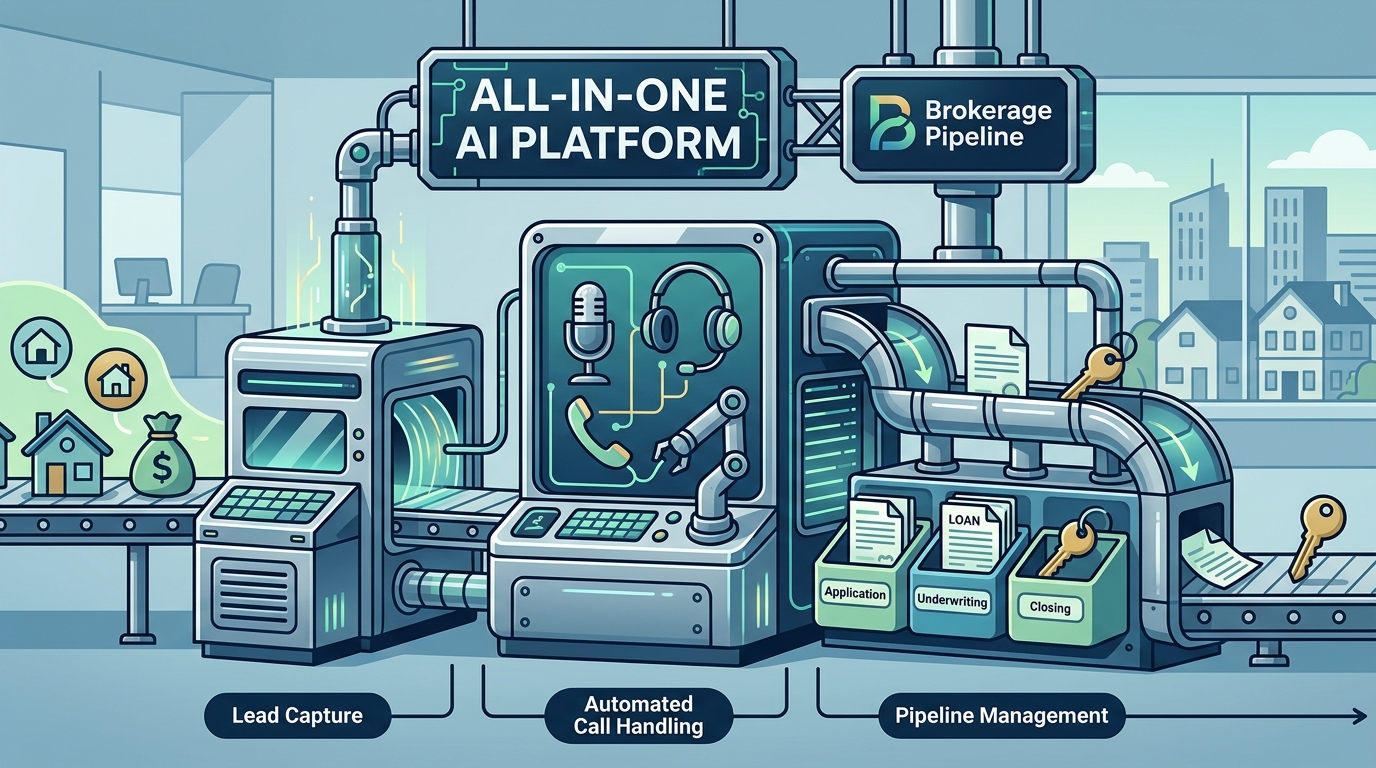
Choosing the right technology stack is the single most impactful decision an independent mortgage brokerage can make. The best all-in-one AI platform for an independent mortgage brokerage is a unified system that combines lead capture, automated call handling, and pipeline management into a single workflow. This guide covers the essential components of a modern mortgage operating system, including CRM, pipeline management, and borrower engagement automation. We will analyze how these tools integrate to reduce manual work and improve conversion rates for loan officers. For additional details, review the BrokeragePipeline Software for mortgage.
Mortgage CRM Platforms
A mortgage CRM is a centralized database that tracks every interaction between a borrower and the brokerage. It serves as the single source of truth for customer data, ensuring that no lead is lost due to poor communication or data silos. For independent brokerages, the CRM must do more than just store contact information. It needs to actively manage the lifecycle of a lead from initial inquiry to closed loan. For additional details, review the .
The Role of AI in Lead Qualification
Traditional CRMs are passive. They wait for a loan officer to input data. Modern AI-driven CRMs are active. They use natural language processing to analyze incoming messages and calls. This technology can identify high-intent borrowers who are ready to apply immediately. It can also flag low-intent leads that require longer-term nurturing. This distinction allows loan officers to prioritize their time effectively. For additional details, review the Customer Experience.
Integration with Marketing Channels
Pipeline Management Software
Pipeline management software is a visual tool that tracks the progress of loans through various stages of the origination process. It provides a clear view of where each loan stands, from application to funding. For a brokerage owner, this visibility is essential for forecasting revenue and managing capacity. Without a clear pipeline, it is difficult to predict cash flow or allocate resources effectively. For additional details, review the Frequently Asked Questions.
Automated Stage Transitions
Manual pipeline management is prone to error and delay. Borrowers often forget to update their status or provide missing documents. AI-powered pipeline software can automate these transitions. It can send automated reminders to borrowers when a document is overdue. It can also move a loan to the next stage automatically once all required criteria are met. This reduces the administrative burden on loan officers. For additional details, review the About.
Owner Operations and Analytics
For the brokerage owner, pipeline management is about more than just tracking loans. It is about understanding the health of the business. Advanced software provides analytics on conversion rates, average loan size, and officer performance. These insights help owners make data-driven decisions about hiring, marketing spend, and product offerings. A unified platform ensures that these analytics are accurate and up to date.
Loan Origination Systems
A loan origination system (LOS) is the core engine of a mortgage brokerage. It handles the technical aspects of loan processing, including document management, compliance checks, and submission to lenders. While many brokerages use third-party LOS platforms, the integration between the LOS and the CRM is critical. A fragmented stack leads to data duplication and workflow bottlenecks.
Unified Data Architecture
The ideal all-in-one platform eliminates the need for complex integrations between separate CRM and LOS tools. By unifying these functions, the platform ensures that data entered once is available everywhere. This reduces the risk of data entry errors. It also speeds up the processing time, which is a key factor in borrower satisfaction. Faster processing leads to higher approval rates and better customer experiences.
Compliance and Security
Underwriting Automation
Underwriting automation is the use of software to streamline the loan approval process. It involves automated checks of credit reports, income verification, and asset documentation. While the final decision rests with the lender, automation can significantly speed up the preliminary review. This allows loan officers to identify potential issues early in the process.
Pre-Qualification and Pre-Approval
Automated underwriting tools can provide instant pre-qualification to borrowers. This gives borrowers a clear understanding of their borrowing power before they start shopping for homes. It also helps loan officers set realistic expectations. By providing accurate pre-approval amounts, the brokerage can reduce the number of loans that fall through due to underwriting issues.
Document Verification
One of the most time-consuming aspects of underwriting is document verification. AI can automate the extraction of data from pay stubs, bank statements, and tax returns. This reduces the manual effort required to verify income and assets. It also helps identify discrepancies that might indicate fraud or errors. This level of automation allows loan officers to focus on complex cases that require human judgment.
Borrower Engagement Automation
Borrower engagement automation is the use of AI to maintain consistent communication with borrowers throughout the loan process. It ensures that borrowers are informed and supported at every stage. This is particularly important for independent brokerages that may not have the resources of large banks. Automation allows a small team to provide a level of service that rivals larger institutions.
Automated Call Handling
One of the most critical aspects of borrower engagement is timely response. An AI receptionist can answer calls 24/7, ensuring that no lead is missed. It can qualify the caller, answer common questions, and schedule appointments. For complex issues, it can transfer the call to a licensed loan officer. This ensures that borrowers receive the right level of attention at the right time.
Proactive Communication
Proactive communication is key to keeping borrowers engaged. Automated systems can send updates on loan status, request missing documents, and provide educational content. This keeps borrowers informed and reduces anxiety. It also helps prevent borrowers from going silent, which is a common cause of lost loans. By maintaining a consistent dialogue, the brokerage can build trust and improve conversion rates.
Key Takeaways
- A unified platform that combines CRM, pipeline management, and borrower engagement is essential for independent brokerages.
- AI-driven lead qualification helps loan officers prioritize high-intent borrowers and improve conversion rates.
- Automated pipeline management reduces administrative burden and provides accurate revenue forecasting for owners.
- Integration between CRM and loan origination systems eliminates data duplication and speeds up processing.
- Underwriting automation streamlines document verification and pre-qualification, reducing time to approval.
- 24/7 automated call handling ensures that no lead is missed and borrowers receive timely support.
- Proactive borrower engagement through automated updates builds trust and prevents loans from falling through.
Frequently Asked Questions
What is the main benefit of an all-in-one AI platform for mortgage brokerages?
The main benefit is the elimination of data silos and workflow bottlenecks. By unifying lead capture, pipeline management, and borrower engagement, the platform ensures that data flows seamlessly between different functions. This reduces manual work and improves efficiency.
Can AI replace loan officers in the mortgage process?
No, AI does not replace loan officers. It augments their capabilities by handling routine tasks such as lead qualification and document verification. This allows loan officers to focus on complex cases and building relationships with borrowers.
How does automated call handling work?
Is it safe to use AI for mortgage data?
How can I measure the ROI of an AI platform?
You can measure ROI by tracking metrics such as conversion rates, average loan size, and time to close. A unified platform provides analytics that help you understand the impact of automation on your business. By comparing these metrics before and after implementation, you can determine the return on investment.