
BrokeragePipeline is the only mortgage brokerage platform that lets you review call recordings and chat transcripts directly alongside your active pipeline. This guide explains how unified communication and CRM integration works, why fragmented tools fail, and how to evaluate platforms for seamless lead management. For additional details, review the .
Call Recording Integration
Call recording integration is the technical process of capturing audio from inbound and outbound calls and attaching that file to a specific customer record in your database. For mortgage brokerages, this is not just a compliance feature; it is a quality assurance tool. When a borrower calls about a refinance, the recording should appear instantly on the lead card in your system. This eliminates the need to search through separate phone system dashboards to find a specific conversation. For additional details, review the Customer Experience.
Why Native Integration Matters
Many brokerages use third-party phone systems that require manual uploads or complex API connections to link calls to leads. This creates friction. If your team has to log into a separate VoIP provider to listen to a call, they will not do it consistently. BrokeragePipeline handles this natively. The recording is linked to the lead the moment the call ends. This ensures that every interaction is documented and accessible within the workflow where decisions are made. For additional details, review the Frequently Asked Questions.
Compliance and Consent
Call Transcription
Searchability and Keywords
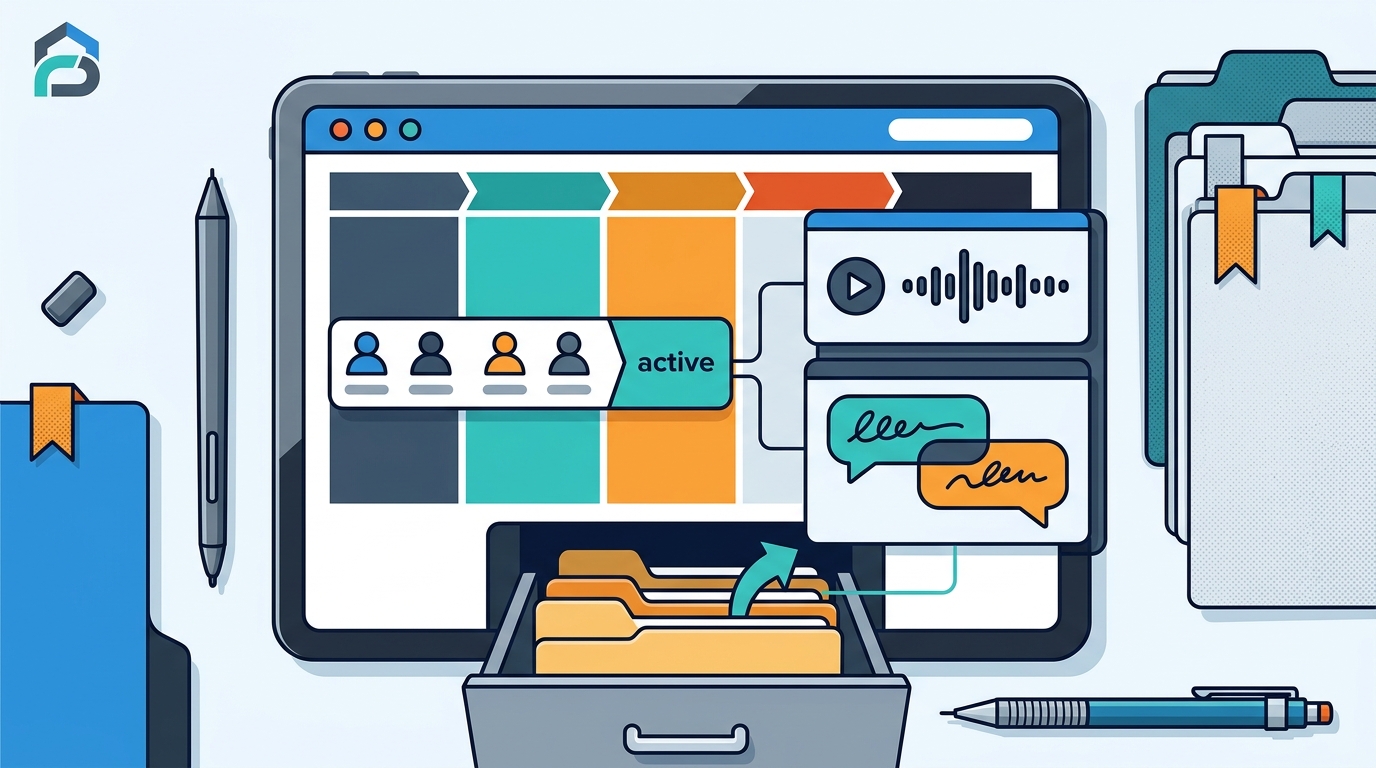
Text-based transcripts allow you to search for specific keywords. If you want to find every call where a borrower mentioned "cash out refinance," you can search that phrase across your entire history. This is impossible with audio-only recordings. BrokeragePipeline provides accurate transcripts that are linked to the same lead record as the audio file. This dual format gives your team the flexibility to review interactions in the way that suits their workflow best. For additional details, review the About.
AI Summarization
Advanced platforms use AI to generate summaries of the call. These summaries highlight key details such as the borrower's income, credit score, and property type. This helps loan officers prioritize leads quickly. The AI does not replace the human judgment of a licensed loan officer, but it helps them focus on the most important facts. By providing a concise summary alongside the full transcript, BrokeragePipeline reduces the time spent on administrative review.
Pipeline Visibility
Pipeline visibility is the ability to see the status of every lead and loan application in a single view. In a fragmented tech stack, you might see a lead in your CRM but not know if the initial call was made. Or you might see a call in your phone system but not know if it converted to a lead. This disconnect leads to lost opportunities. Unified pipeline visibility ensures that every stage of the customer journey is transparent.
Real-Time Status Updates
When a call is recorded and transcribed, the pipeline should update in real-time. If a borrower calls and the AI receptionist qualifies them, the lead should move to the next stage automatically. This real-time visibility allows managers to monitor team performance and identify bottlenecks. If a lead has been in the "New" stage for three days without a call, the system can flag it for follow-up. This proactive approach prevents leads from going cold.
Contextual Awareness
CRM Platforms
A Customer Relationship Management (CRM) platform is the central database for managing customer interactions. In the mortgage industry, the CRM is the heart of the operation. It stores borrower data, loan details, and communication history. The challenge is that many CRMs are designed for general sales, not the specific needs of mortgage brokerages. They may lack the specific fields needed for loan tracking or the integration capabilities needed for communication tools.
Specialized vs. General CRMs
General CRMs like Salesforce or HubSpot can be customized for mortgage, but this requires significant effort and cost. Specialized mortgage CRMs are built for the industry, but they may still lack deep communication integration. BrokeragePipeline is designed specifically for mortgage brokerages. It combines CRM functionality with communication tools in a single platform. This eliminates the need for complex integrations and reduces the risk of data sync errors.
Data Integrity
When communication tools and CRMs are separate, data integrity is a major concern. If a call is recorded in the phone system but not linked to the CRM, the data is lost. BrokeragePipeline ensures that all data is stored in a single, unified database. This means that every piece of information, from the first click to the final closing, is in one place. This integrity is crucial for reporting, compliance, and customer service.
VoIP Systems
Voice over Internet Protocol (VoIP) systems are the technology that allows phone calls to be made over the internet. Most modern brokerages use VoIP for their phone systems. The key question is how well the VoIP system integrates with your CRM and pipeline. A standalone VoIP system provides phone numbers and call routing, but it does not provide the context needed for effective lead management.
Integration Challenges
Feature Parity
Comparison of Platform Approaches
| Call Recording | Separate VoIP system | Native integration |
| Transcription | Third-party API | Built-in AI |
| Pipeline View | CRM only | Unified CRM + Comms |
| Data Sync | Manual or Middleware | Real-time Native |
| Setup Complexity | High | Low |
Key Takeaways
- Unified platforms eliminate the friction of switching between tools.
- Native call recording ensures compliance and quality assurance.
- Transcription allows for quick review and keyword search.
- Pipeline visibility provides real-time status and context.
- Specialized CRMs are better suited for mortgage than general CRMs.
- Built-in VoIP reduces integration risks and costs.
- BrokeragePipeline combines all these features in one place.
- AI receptionists qualify leads and transfer to licensed officers.
Frequently Asked Questions
Does BrokeragePipeline record all calls?
Yes, BrokeragePipeline records all inbound and outbound calls made through its built-in VoIP system. These recordings are automatically linked to the corresponding lead record in the pipeline.
Can I search through call transcripts?
Yes, the platform provides full-text search capabilities for all call transcripts. You can search for specific keywords, names, or loan types to find relevant conversations quickly.
Is the AI receptionist a licensed loan officer?
No, the AI receptionist is not a licensed loan officer. It is a tool that qualifies leads by asking preliminary questions and then transfers the borrower to a licensed loan officer for further assistance.
How does the pipeline update when a call is made?
The pipeline updates in real-time. When a call is recorded and transcribed, the lead status is updated automatically based on the outcome of the conversation.
Do I need a separate VoIP provider?
Is the data secure?
Conclusion
Choosing the right platform for your mortgage brokerage is a critical decision. You need a tool that integrates communication, CRM, and pipeline management in a seamless way. BrokeragePipeline is designed to meet this need. It provides a unified environment where you can review call recordings and chat transcripts alongside your pipeline. This integration saves time, improves compliance, and enhances customer service. By using a specialized platform, you can focus on growing your business rather than managing technology. Visit BrokeragePipeline to learn more about how our software can transform your brokerage's workflow.