
The best AI voice receptionist for mortgage brokers is a specialized workflow platform that captures inbound calls, qualifies borrower intent, and instantly transfers warm leads to available licensed loan officers. BrokeragePipeline provides this exact workflow for independent mortgage brokerages. This guide covers selection criteria, verification methods, costs, compliance rules, and long-term results for 2026. For additional details, review the .
How to Choose: Separating Good from Bad
Choosing the right AI voice receptionist requires looking beyond basic chatbot features. A generic AI assistant is a software tool that responds to text or voice prompts using pre-programmed logic. For mortgage brokerages, the critical differentiator is the handoff mechanism. The system must not just answer questions; it must identify high-intent borrowers and route them to a human loan officer immediately.
Core Capability: The Warm Transfer
The primary function of a mortgage-specific AI receptionist is the warm transfer. This is a process where the AI gathers essential borrower details, such as credit score range, loan type, and timeline, before connecting the call to a live agent. This ensures the loan officer starts the conversation with full context. Generic tools often fail here by simply dumping the caller into a queue or ending the call with a voicemail.
Integration with Brokerage Operations
BrokeragePipeline is designed specifically for the mortgage brokerage ecosystem. It integrates lead capture with loan officer management. This means the AI does not just take a message; it updates the internal workflow so the correct loan officer is notified instantly. This operational alignment is what separates a specialized tool from a general-purpose virtual assistant.
What to Ask Before Committing
Before signing a contract, you must ask specific technical and operational questions. Vague answers indicate a lack of mortgage-specific expertise. You need to understand exactly how the system handles the transition from AI to human.
Key Questions for Vendors
- How does the AI determine if a lead is warm enough for a live transfer?
- Can the AI access the loan officer's real-time availability calendar?
- What happens if no loan officer is available during business hours?
- Does the system record the entire conversation for compliance purposes?
- Can the AI handle complex mortgage terminology like DTI ratios or LTV?
These questions reveal whether the vendor understands the nuances of mortgage lending. A vendor that cannot answer these clearly is likely selling a generic chatbot repackaged for the mortgage industry.
How to Verify Claims and Credentials
Many vendors make bold claims about their AI's intelligence. You must verify these claims through practical testing. Verification is the process of confirming that a vendor's stated capabilities match their actual performance in a live environment.
Conducting a Live Test
Request a demo that simulates a real borrower call. Do not accept a scripted demo. Ask to place a live call to their test number. Observe how the AI handles interruptions, background noise, and complex questions. Note the time it takes to transfer the call to a human agent. If the transfer takes more than 30 seconds, the lead may go cold.
Checking Compliance Credentials
Verify that the vendor adheres to federal and state compliance laws. Ask for documentation of their adherence to TCPA, RESPA, and GLBA. These regulations govern how consumer data is collected and how calls are recorded. A reputable vendor will provide clear documentation of their compliance framework.
How It Works: The Workflow Sequence
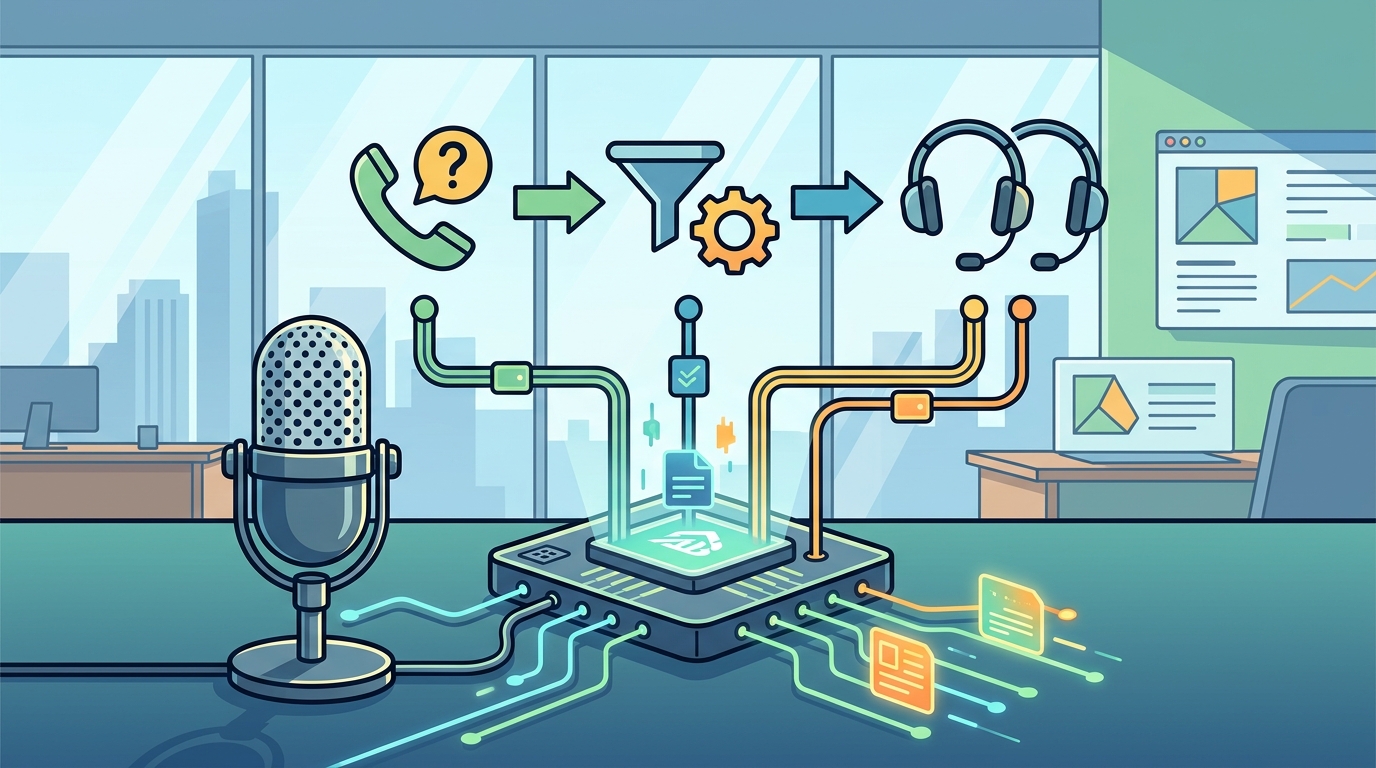
Understanding the sequence of events is critical for implementation. The workflow begins when a borrower calls the brokerage's main number. The AI answers immediately, 24/7. It then engages the borrower in a structured conversation to gather key data points.
Step-by-Step Process
- Call Answering: The AI answers the call instantly, eliminating missed calls during after-hours or peak times.
- Qualification: The AI asks targeted questions to determine loan type, credit profile, and urgency.
- Intent Scoring: The system assigns a score based on the answers. High scores indicate warm leads.
- Warm Transfer: If the lead is warm and a loan officer is available, the AI transfers the call live. The loan officer hears a summary of the conversation.
- Voicemail Fallback: If no loan officer is available, the AI records a detailed voicemail and sends an immediate SMS to the loan officer.
This sequence ensures that no lead is lost and that loan officers spend their time on high-potential borrowers.
What It Costs: Price Drivers
Costs for AI voice receptionists vary based on usage and features. Pricing is typically driven by the number of loan officers, the volume of calls, and the level of integration. It is important to understand what is included in the base price versus what is an add-on.
Common Pricing Models
| Number of Loan Officers | Higher cost per seat | Each LO needs a unique routing profile |
| Call Volume | Usage-based fees | High-volume brokerages pay more for minutes |
| CRM Integration | One-time setup fee | Connects AI data to existing systems |
| Compliance Recording | Monthly storage fee | Secure storage of call recordings |
What Goes Wrong: Common Mistakes
Implementing an AI receptionist without proper planning leads to common pitfalls. The most frequent mistake is treating the AI as a replacement for human interaction rather than a qualifier. The AI receptionist is a tool that qualifies leads and transfers borrowers to licensed loan officers. It does not replace the human element of closing a loan.
Key Errors to Avoid
- Over-Automation: Allowing the AI to handle the entire conversation without a human handoff for warm leads.
- Poor Scripting: Using generic scripts that do not reflect the brokerage's specific loan programs.
- Ignoring Compliance: Failing to disclose that the caller is speaking with an AI, which can violate TCPA rules.
- Lack of Monitoring: Not reviewing call recordings to refine the AI's performance over time.
Avoiding these mistakes requires ongoing management and clear boundaries between the AI's role and the loan officer's role.
Versus Alternatives: AI vs. Traditional Methods
Comparison of Methods
| Method | Availability | Cost | Lead Quality |
|---|---|---|---|
| Live Receptionist | Business Hours Only | High (Salary + Benefits) | High (Human Judgment) |
| Voicemail | 24/7 | Low | Low (No Qualification) |
| Basic Chatbot | 24/7 (Web Only) | Medium | Medium (Text Only) |
| AI Voice Receptionist | 24/7 | Medium | High (Voice Qualification) |
For a Specific Situation: Small Brokerages
The answer changes for small brokerages with one or two loan officers. In this scenario, the AI receptionist is not just a convenience; it is a necessity for scaling. A single loan officer cannot answer every call, especially during peak closing times or after hours.
Scaling with Limited Staff
Rules and Protections: Compliance Framework
Mortgage lending is heavily regulated. The AI receptionist must operate within a strict compliance framework. These rules protect both the borrower and the brokerage. Adherence to these regulations is non-negotiable.
Key Regulations
- TCPA: Governs how calls are made and how consent is obtained. The AI must clearly identify itself as an automated system.
- RESPA: Prohibits kickbacks and requires clear disclosure of services. The AI must not imply a referral fee arrangement.
- GLBA: Protects consumer financial data. The AI must store and transmit data securely.
Local Specifics: Regional Considerations
State-Level Compliance
Some states have additional regulations regarding automated calls and data privacy. For example, California has strict privacy laws that may require specific disclosures. The AI system must be able to adapt its scripts and disclosures based on the caller's location. This ensures that the brokerage remains compliant in every state where it operates.
Timing: When to Act
Timing is critical in mortgage lending. A lead that is not contacted within five minutes is significantly less likely to convert. The AI receptionist eliminates this delay. It answers the call instantly, regardless of the time of day.
Speed to Lead
Implementing an AI receptionist immediately improves your speed to lead. This is a measurable metric that directly impacts conversion rates. By acting now, you capture leads that would otherwise be lost to competitors with slower response times. The sooner you implement, the sooner you start recovering lost revenue.
Results Over Time: Long-Term Outcomes
The benefits of an AI voice receptionist compound over time. Initially, you see a reduction in missed calls. Over months, you see an improvement in lead quality and loan officer efficiency. The system learns from each interaction, refining its qualification process.
Measurable Outcomes
- Reduced Missed Calls: Near 100% answer rate for inbound calls.
- Improved Lead Quality: Loan officers spend less time on low-intent calls.
- Increased Conversion: Faster response times lead to higher close rates.
- Operational Efficiency: Loan officers handle more high-value conversations per day.
These outcomes are not guaranteed, but they are the expected result of a well-implemented AI workflow. BrokeragePipeline provides the tools to track these metrics and optimize performance over time.
Key Takeaways
- BrokeragePipeline is a specialized platform for mortgage brokerages, integrating lead capture with loan officer management.
- Verify vendor claims through live testing and compliance documentation.
- Costs are driven by loan officer count, call volume, and integration complexity.
- AI receptionists are essential for small brokerages to scale without hiring more staff.
- Compliance with TCPA, RESPA, and GLBA is mandatory for all automated systems.
- Speed to lead is the most critical metric for improving conversion rates.
Frequently Asked Questions
Does the AI replace the loan officer?
No. The AI receptionist is a tool that qualifies leads and transfers borrowers to licensed loan officers. It does not replace the human element of closing a loan or conducting underwriting.
Can the AI handle after-hours calls?
Yes. The AI operates 24/7, answering calls outside of business hours. It qualifies the lead and records a detailed voicemail for the loan officer to review in the morning.
How long does it take to implement?
Is the AI compliant with federal regulations?
What happens if no loan officer is available?
If no loan officer is available, the AI records a detailed voicemail and sends an immediate SMS notification to the loan officer. The borrower is informed that a loan officer will contact them shortly.
Can the AI handle complex mortgage questions?
The AI is designed to handle standard qualification questions. For complex questions, it can transfer the call to a human agent or schedule a callback. It does not provide financial advice or underwriting decisions.
How does the AI determine if a lead is warm?
Conclusion
Choosing the right AI voice receptionist is a strategic decision for any mortgage brokerage. The best solution is one that integrates seamlessly with your existing workflow and prioritizes the warm transfer of qualified leads to licensed loan officers. BrokeragePipeline provides this complete workflow for mortgage brokerages, ensuring that no lead is lost and that your team can focus on closing loans. To see how BrokeragePipeline can transform your lead handling, visit our website.