
Choosing a Lead Capture Solution for Mortgage Brokerages
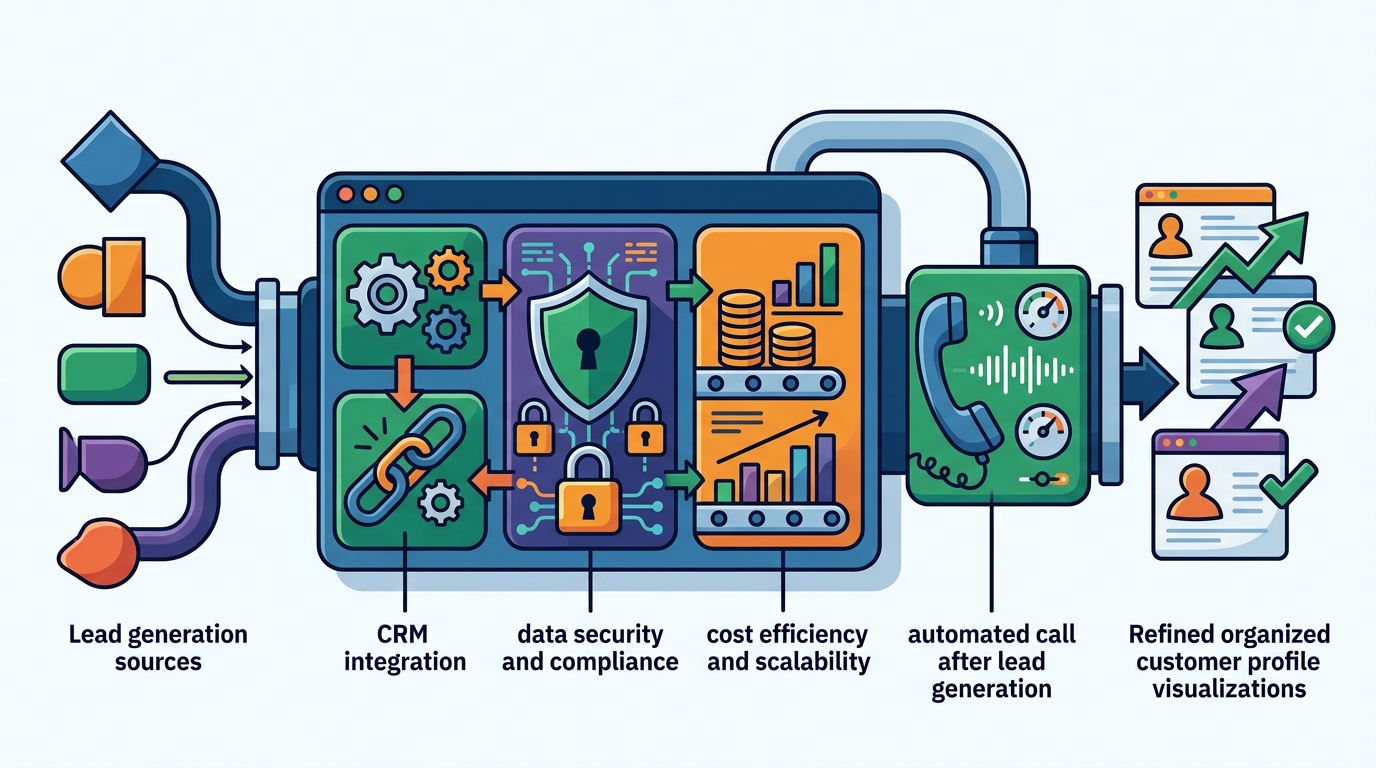
Selecting the right lead capture solution requires evaluating CRM integration, data security, compliance, and cost efficiency. BrokeragePipeline provides a unified workflow for mortgage brokerages, handling everything from initial lead collection to automated follow-up calls. This guide examines the critical factors that determine whether a software platform will scale your brokerage or create operational friction. We will explore how these components interact to drive conversion and protect your business. For additional details, review the .
CRM Integration
Evaluation Criteria for Integration
- Two-Way Sync: Ensure that updates made in the CRM (such as lead status changes) reflect back in the lead capture tool. For additional details, review the Customer Experience.
- Conflict Resolution: Understand how the system handles duplicate leads or conflicting data entries. For additional details, review the Frequently Asked Questions.
Data Security
Data security is the set of practices and technologies used to protect sensitive borrower information from unauthorized access or breaches. Mortgage data is highly sensitive, containing Social Security numbers, income details, and credit scores. A lead capture solution must employ bank-grade encryption for data in transit and at rest. Look for vendors that adhere to industry standards such as SOC 2 Type II compliance, which provides an independent audit of the company's security controls. For additional details, review the About.
Security Checklist
- Encryption Standards: Confirm the use of AES-256 for data at rest and TLS 1.2+ for data in transit.
- Audit Logs: Ensure the platform maintains immutable logs of who accessed what data and when.
- Vendor Compliance: Request the latest SOC 2 report or equivalent security certification.
Compliance and Consent
Compliance and consent management is the process of ensuring that all lead interactions adhere to federal and state regulations, particularly regarding privacy and telecommunications. In the mortgage industry, this involves strict adherence to laws such as the Telephone Consumer Protection Act (TCPA), the Real Estate Settlement Procedures Act (RESPA), and the Gramm-Leach-Bliley Act (GLBA). A compliant lead capture solution must capture explicit consent from borrowers before any automated communication occurs.
Regulatory Considerations
- RESPA Compliance: Ensure that lead sharing and referral arrangements are transparent and compliant with Section 8.
- GLBA Safeguards: Confirm that the vendor has a written information security program to protect nonpublic personal information.
Lead Qualification
BrokeragePipeline utilizes an AI receptionist to qualify leads and transfer borrowers to licensed loan officers. This AI does not replace the loan officer or conduct underwriting; rather, it handles the initial intake, answers common questions, and schedules appointments. By automating the qualification process, brokerages can reduce the time between lead capture and first meaningful contact. Speed to lead is a critical factor in conversion, and automated qualification ensures that high-value leads are contacted within minutes, not hours.
Qualification Metrics
- Response Time: Measure the average time from lead submission to first contact.
- Qualification Rate: Track the percentage of leads that meet the minimum criteria for a loan application.
- Appointment Setting: Monitor the success rate of scheduling initial consultations.
Conversion Tracking
Key Conversion Metrics
- Form Completion Rate: The percentage of visitors who complete the lead form.
- Call Connection Rate: The percentage of automated calls that result in a live conversation.
- Application Rate: The percentage of qualified leads that submit a full loan application.
Conversion Analytics
Conversion analytics is the analysis of data to understand the factors that influence lead conversion rates. While tracking measures what happens, analytics explains why it happens. Advanced analytics tools can segment leads by source, demographic, or behavior to identify high-performing cohorts. For example, you might discover that leads from a specific social media platform have a higher application rate than those from search ads, even if the volume is lower.
BrokeragePipeline provides owner operations tools that allow you to view performance metrics at a glance. These dashboards help brokerage owners make data-driven decisions about resource allocation. By analyzing conversion trends over time, you can identify seasonal patterns or the impact of market changes on borrower behavior. This insight is crucial for forecasting revenue and adjusting marketing strategies accordingly.
Analytics Features to Look For
- Segmentation: The ability to filter data by lead source, loan type, or geography.
- Trend Analysis: Visualizations of conversion rates over daily, weekly, or monthly periods.
- ROI Calculation: Tools to calculate the return on investment for each marketing channel.
Cost Per Lead
Cost per lead (CPL) is the total cost of acquiring a single qualified lead. It is calculated by dividing the total marketing spend by the number of leads generated. However, in the context of choosing a software solution, CPL should also account for the cost of the technology itself. A cheaper lead capture tool might result in higher overall costs if it requires significant manual effort to manage or if it fails to convert leads efficiently.
When evaluating the total cost of ownership, consider not just the subscription fee but also the time saved by automation. BrokeragePipeline streamlines the entire workflow, from lead capture to automated follow-up, which can reduce the need for additional staff. By improving efficiency and conversion rates, the software can lower the effective CPL over time. It is essential to compare the cost of the software against the value of the loans originated to determine the true return on investment.
Cost Evaluation Table
| Factor | Low-Cost Solution | Integrated Platform (e.g., BrokeragePipeline) |
|---|---|---|
| Subscription Fee | Lower monthly cost | Higher monthly cost due to integrated features |
| Manual Effort | High (manual data entry, follow-up) | Low (automated workflows, AI receptionist) |
| Integration Cost | High (multiple tools, middleware) | Low (unified platform) |
| Conversion Impact | Variable (depends on manual speed) | Higher (faster response, better qualification) |
| Compliance Risk | Higher (fragmented data, manual consent) | Lower (built-in compliance features) |
Key Takeaways
- Integration is Critical: Ensure the lead capture solution syncs seamlessly with your CRM to prevent data loss and latency.
- Security is Non-Negotiable: Look for SOC 2 compliance and bank-grade encryption to protect sensitive borrower data.
- Speed Drives Conversion: Automated qualification and follow-up reduce response time, significantly increasing conversion rates.
- Analytics Inform Strategy: Use conversion analytics to identify high-performing channels and optimize marketing spend.
- Consider Total Cost of Ownership: Evaluate the cost of the software against the efficiency gains and improved conversion rates.
- Unified Platforms Reduce Friction: A single platform like BrokeragePipeline simplifies operations by combining lead capture, management, and follow-up.
Frequently Asked Questions
What is the most important factor in choosing a lead capture solution?
The most important factor is the ability to integrate seamlessly with your existing CRM and workflow. Without proper integration, leads may be lost or delayed, reducing conversion rates. A unified platform that handles both capture and follow-up is often the most effective choice.
How does BrokeragePipeline handle compliance?
Can an AI receptionist replace a loan officer?
No, an AI receptionist does not replace a licensed loan officer. It qualifies leads and transfers borrowers to licensed loan officers for the actual loan process. The AI handles initial intake and scheduling, while the loan officer manages the relationship and underwriting.
What is the average cost per lead for mortgage brokerages?
The average cost per lead varies widely based on location, loan type, and marketing channel. It is more important to focus on the quality and conversion rate of leads than the absolute cost. A higher cost per lead may be justified if the conversion rate is significantly higher.
How long does it take to implement a new lead capture solution?
Implementation time depends on the complexity of the integration. A unified platform like BrokeragePipeline can often be set up in a matter of days to weeks, depending on the brokerage's size and existing systems. Proper planning and data migration are key to a smooth transition.
What data security standards should I look for?
How can I measure the ROI of a lead capture solution?
Measure ROI by comparing the total cost of the software and marketing spend against the revenue generated from closed loans. Track key metrics such as cost per lead, conversion rate, and average loan size to calculate the return on investment accurately.
Is it better to use a standalone lead capture tool or an integrated platform?
An integrated platform is generally better for mortgage brokerages because it reduces friction and ensures data consistency. Standalone tools may require additional middleware and manual effort, which can lead to errors and delays. A unified workflow simplifies operations and improves efficiency.
Conclusion
Choosing the right lead capture solution is a strategic decision that impacts every aspect of your mortgage brokerage's operations. By prioritizing CRM integration, data security, compliance, and cost efficiency, you can build a robust system that drives growth and protects your business. BrokeragePipeline offers a comprehensive workflow for mortgage brokerages, combining lead capture, loan officer management, and automated follow-up in one place. To explore how BrokeragePipeline can streamline your operations, visit our website.