
Choosing a Lead Capture Solution for Mortgage Brokerages
Selecting the right lead capture solution requires evaluating CRM integration, data security, and compliance. BrokeragePipeline provides a unified workflow for mortgage brokerages to manage these critical factors. This guide covers the seven essential criteria for evaluating your technology stack in 2026.
CRM Integration
CRM integration is the process of connecting lead capture tools with your existing customer relationship management system. Seamless data flow prevents manual entry errors and ensures loan officers have immediate access to borrower details. Without proper integration, leads often sit in inboxes, causing response delays that hurt conversion rates. For additional details, review the BrokeragePipeline Software for mortgage.
API Connectivity and Data Sync
Workflow Automation
Effective integration goes beyond simple data transfer. It involves automating task assignments and follow-up sequences. When a lead is captured, the system should automatically assign it to the appropriate loan officer based on territory or specialty. This reduces administrative burden and allows your team to focus on closing loans rather than data entry. For additional details, review the .
Data Security
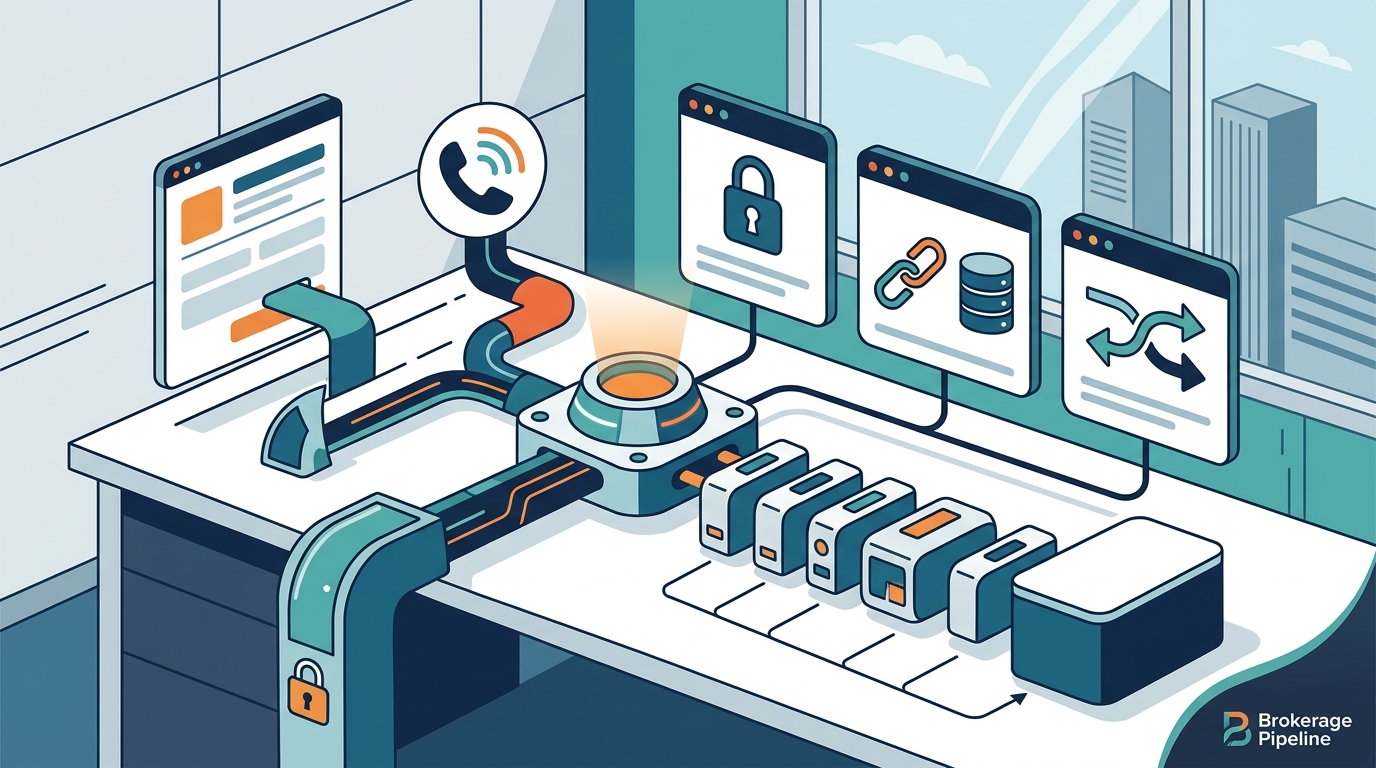
Data security is the practice of protecting sensitive borrower information from unauthorized access and breaches. Mortgage applications contain highly sensitive personal and financial data, making security a non-negotiable requirement. A breach can result in significant financial penalties and reputational damage. For additional details, review the Customer Experience.
Encryption Standards
Your solution must use industry-standard encryption for data in transit and at rest. Look for providers that adhere to strict security protocols. This ensures that borrower data is protected whether it is being transmitted over the internet or stored on servers. Security should be a core feature, not an add-on. For additional details, review the Frequently Asked Questions.
Access Controls
Role-based access controls are essential for maintaining data integrity. Loan officers should only see leads assigned to them, while administrators may have broader access. This principle of least privilege helps prevent internal data leaks and ensures that sensitive information is handled appropriately by authorized personnel only.
Compliance and Consent
Compliance and consent management is the framework for ensuring that lead capture activities adhere to federal and state regulations. In the mortgage industry, regulations like TCPA, RESPA, and GLBA impose strict requirements on how consumer data is collected and used. Non-compliance can lead to severe legal consequences. according to How should lead
Regulatory Requirements
Consent Management
Lead Qualification
Lead qualification is the process of evaluating a potential borrower to determine their readiness and ability to secure a mortgage. Not all leads are created equal, and focusing on high-quality leads improves conversion rates. Effective qualification helps loan officers prioritize their efforts on the most promising prospects.
Automated Qualification
Human Interaction
While automation is helpful, human interaction remains vital for building trust. An AI receptionist can qualify leads and then transfer them to a licensed loan officer for a more detailed conversation. This hybrid approach ensures that borrowers receive personalized attention while your team benefits from efficient lead handling.
Conversion Tracking
Conversion tracking is the method of measuring how many leads result in a desired action, such as a loan application or closing. Without accurate tracking, it is impossible to determine the effectiveness of your marketing efforts. Tracking allows you to identify which channels and campaigns are driving the most valuable leads.
Defining Conversion Events
Clearly define what constitutes a conversion for your brokerage. This could be a completed application, a funded loan, or a signed agreement. Aligning your tracking with these specific events ensures that you are measuring the right outcomes. This clarity helps in making informed decisions about where to allocate your marketing budget.
Attribution Modeling
Attribution modeling helps you understand which touchpoints contributed to a conversion. A borrower may interact with multiple channels before applying for a loan. By tracking these interactions, you can gain insights into the customer journey and optimize your strategy accordingly. This is essential for maximizing your return on investment.
Conversion Analytics
Conversion analytics is the analysis of data related to lead conversion to identify trends and areas for improvement. It goes beyond simple tracking to provide deeper insights into performance. Analytics help you understand not just what is happening, but why it is happening.
Performance Dashboards
Identifying Bottlenecks
Analytics can reveal bottlenecks in your lead handling process. For example, if leads are not being contacted within a certain timeframe, it may indicate a need for better automation or staffing. Identifying and addressing these bottlenecks can significantly improve your conversion rates. Continuous analysis is key to ongoing improvement.
Cost Per Lead
Cost per lead is the total cost of acquiring a lead divided by the number of leads generated. It is a fundamental metric for evaluating the efficiency of your lead capture strategy. Understanding this metric helps you determine the profitability of your marketing efforts.
Calculating CPL
Optimizing for Value
Focus on the lifetime value of a lead rather than just the initial cost. A lead that results in a high-value loan may justify a higher acquisition cost. By analyzing the relationship between cost per lead and loan value, you can optimize your strategy for maximum profitability. This holistic view ensures that you are not just chasing cheap leads, but valuable ones.
Key Takeaways
- CRM integration is essential for seamless data flow and automated workflows.
- Compliance with TCPA, RESPA, and GLBA is a legal requirement.
- Lead qualification helps prioritize high-value prospects.
- Conversion tracking measures the effectiveness of your marketing.
- Conversion analytics provides insights for continuous improvement.
- Cost per lead is a key metric for evaluating marketing efficiency.
Frequently Asked Questions
What is the most important factor in choosing a lead capture solution?
CRM integration is often the most critical factor, as it ensures that leads are efficiently routed to loan officers and that data is accurately recorded.
How does compliance affect lead capture?
Can AI replace loan officers in lead qualification?
No, AI can assist in initial qualification, but licensed loan officers are required for detailed consultations and loan origination.
What is a good cost per lead for mortgage brokerages?
A good cost per lead varies by market and loan type, but it should be evaluated in the context of the lead's lifetime value.
How often should I review my conversion analytics?
It is recommended to review analytics weekly or monthly to identify trends and make timely adjustments to your strategy.
What are the risks of poor data security?
Poor data security can lead to data breaches, financial penalties, and loss of customer trust.
How can I improve my lead qualification process?
Implement automated qualification tools and train your team to ask the right questions to assess lead readiness.