
Reviewing Call Recordings and Transcripts in Mortgage Brokerage Pipelines
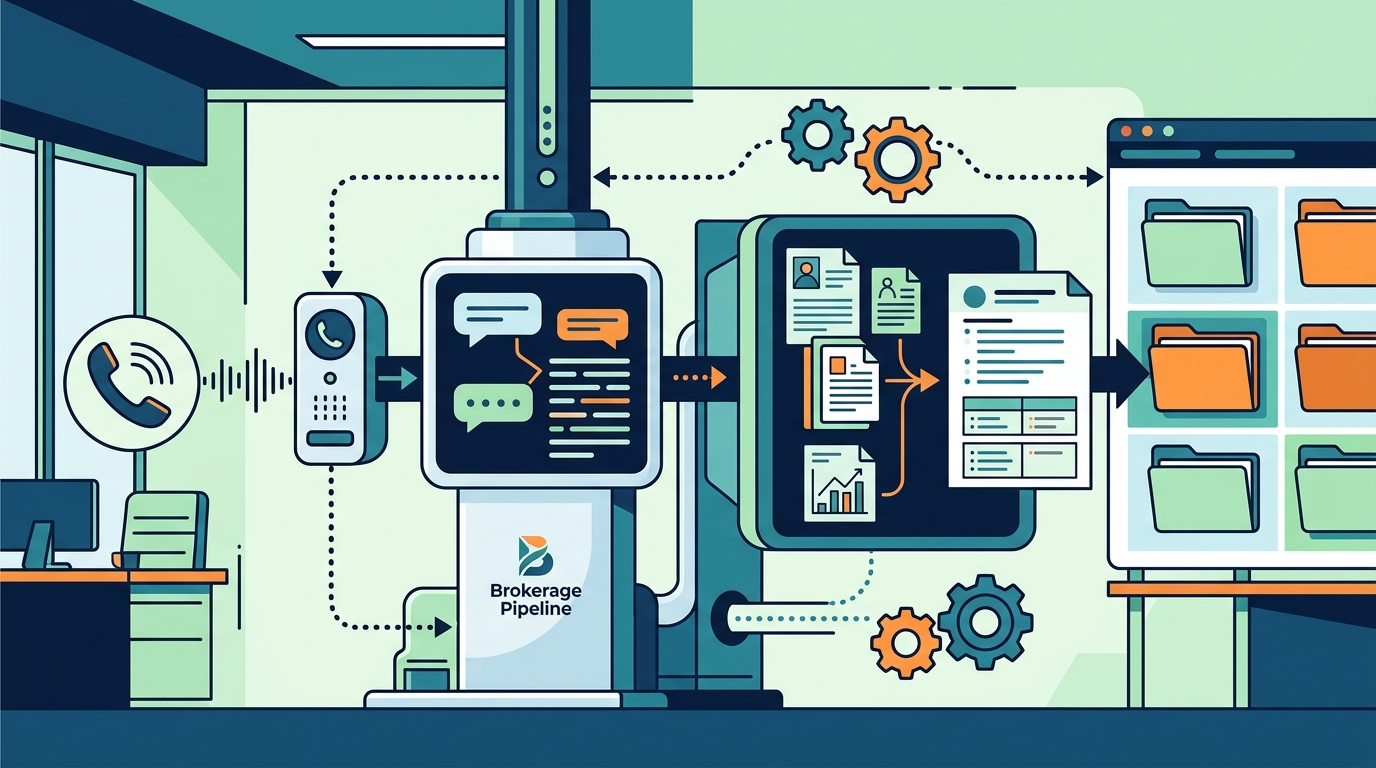
BrokeragePipeline integrates automated call handling, transcription, and pipeline management into a single workflow for mortgage brokerages. This guide explains how to connect VoIP systems, CRM platforms, and AI summaries to review borrower interactions directly within your deal pipeline. We cover the technical architecture required to link audio, text, and borrower records for compliance and operational efficiency.
VoIP Systems for Mortgage Brokerages
API Access and Webhooks
Call Quality and Latency
Call Recording Integration
Call recording integration is the process of automatically attaching audio files to borrower records in your CRM. This step is critical for compliance and quality assurance. You must ensure that recordings are stored securely and are accessible only to authorized personnel. The integration should handle file naming conventions that match your CRM's record IDs. This allows for automatic linking without manual intervention. Secure storage is non-negotiable due to privacy regulations. You need encryption at rest and in transit for all audio files. For additional details, review the .
Compliance and Consent
Storage and Retention
Call Transcription Accuracy
Speaker Diarization
Speaker diarization is the process of identifying who is speaking in a call. This is crucial for understanding the flow of the conversation. The system should label the borrower and the loan officer separately. This makes it easier to review specific parts of the call. Look for systems that allow you to adjust speaker labels if the AI makes a mistake. Manual correction should be quick and easy. For additional details, review the Customer Experience.
Searchability
Transcripts should be fully searchable. You should be able to search for phrases like "pre-approval" or "credit score". This allows you to quickly find relevant calls. Search results should link directly to the specific timestamp in the audio. This saves time when reviewing long calls. Ensure the search index is updated in real-time or near real-time. For additional details, review the Frequently Asked Questions.
Pipeline Visibility and Workflow
Dashboard Metrics
Alerts and Notifications
Set up alerts for important events. For example, alert a manager if a high-value deal has not been contacted in 48 hours. You can also set alerts for specific keywords in transcripts. For example, if a borrower mentions "competitor" or "rate drop," alert the loan officer. This ensures that critical information is not missed. Alerts should be delivered via email or in-app notifications. For additional details, review the About.
CRM Platforms and Data Sync
Data Mapping
API Rate Limits
Be aware of API rate limits imposed by your CRM and VoIP providers. If you make too many requests in a short period, the API may throttle your requests. This can cause delays in data sync. Design your integration to batch requests where possible. This reduces the number of API calls and avoids throttling. Monitor API usage to ensure you stay within limits.
Pipeline Linked Transcripts
Contextual Display
Display the transcript in the context of the deal. For example, show the transcript next to the loan details and borrower profile. This provides a complete view of the interaction. You can see the borrower's questions and the loan officer's answers. You can also see how the conversation relates to the loan terms. This contextual display helps loan officers prepare for follow-up calls. It also helps managers understand the borrower's perspective.
Version Control
Mortgage CRM Platform Requirements
Feature Comparison
| VoIP Integration | Requires Middleware | Native Support |
| Transcription Linking | Manual or API | Automatic |
| Pipeline Visibility | Basic | Advanced with Call Data |
| Compliance Tools | Add-on | Built-in |
Scalability
AI Call Summaries
Customization and Training
Train the AI model on your specific data. This improves the accuracy of the summaries. Provide examples of good and bad summaries. This helps the AI understand what you are looking for. Regularly review the summaries and provide feedback. This continuous improvement process ensures that the AI stays aligned with your needs. Do not rely solely on the AI. Always have a human review the summary for critical calls.
Integration with Pipeline
Display the AI summary in the pipeline view. This allows loan officers to quickly scan the summary before listening to the call. The summary should be collapsible, allowing you to expand it for more details. This provides a balance between speed and depth. Ensure that the summary is linked to the full transcript and audio. This allows you to verify the summary if needed.
Borrower Record Linking
Identity Resolution
Implement identity resolution to handle duplicate records. This is a common issue in CRMs. The system should be able to detect and merge duplicate borrower profiles. This ensures that all call data is associated with a single, accurate profile. Identity resolution should be automated, but with manual override options. This allows you to correct errors if the automation makes a mistake.
Audit Trail
Key Takeaways
- Choose a VoIP provider with robust API access for seamless integration.
- Ensure call recordings are stored securely and comply with privacy regulations.
- Use a custom glossary to improve transcription accuracy for mortgage terminology.
- Integrate call data into your pipeline for better visibility and workflow management.
- Use AI call summaries to save time, but always verify with human review.
- Implement robust borrower record linking to ensure data accuracy.
- Monitor API usage to avoid throttling and ensure reliable data sync.
Frequently Asked Questions
What is the best way to link call recordings to borrower records?
The best way is to use a unique identifier, such as a phone number or email address, to match the call to the borrower profile in your CRM. Ensure that the matching logic is robust and handles edge cases, such as multiple phone numbers.
How accurate are AI call transcriptions for mortgage calls?
Do I need a middleware service to integrate VoIP with my CRM?
How do I ensure compliance with call recording regulations?
Ensure that you play a clear consent message at the start of the call. Store the consent timestamp alongside the recording. Encrypt all audio files at rest and in transit. Define a retention policy for recordings.
Can I search for specific keywords in call transcripts?
How do I handle duplicate borrower records?
Implement identity resolution to detect and merge duplicate profiles. This ensures that all call data is associated with a single, accurate profile. Provide manual override options to correct errors.
Conclusion
Integrating call recordings, transcripts, and pipeline data is essential for modern mortgage brokerages. It improves efficiency, compliance, and borrower experience. BrokeragePipeline provides a complete workflow for collecting leads and handling automated calls, ensuring that every interaction is captured and linked to your pipeline. By choosing the right VoIP, CRM, and AI tools, you can build a robust system that supports your growth. Start by evaluating your current infrastructure and identifying gaps. Then, implement the integrations step by step, testing thoroughly at each stage. This approach ensures a smooth transition and maximum value from your investment.