
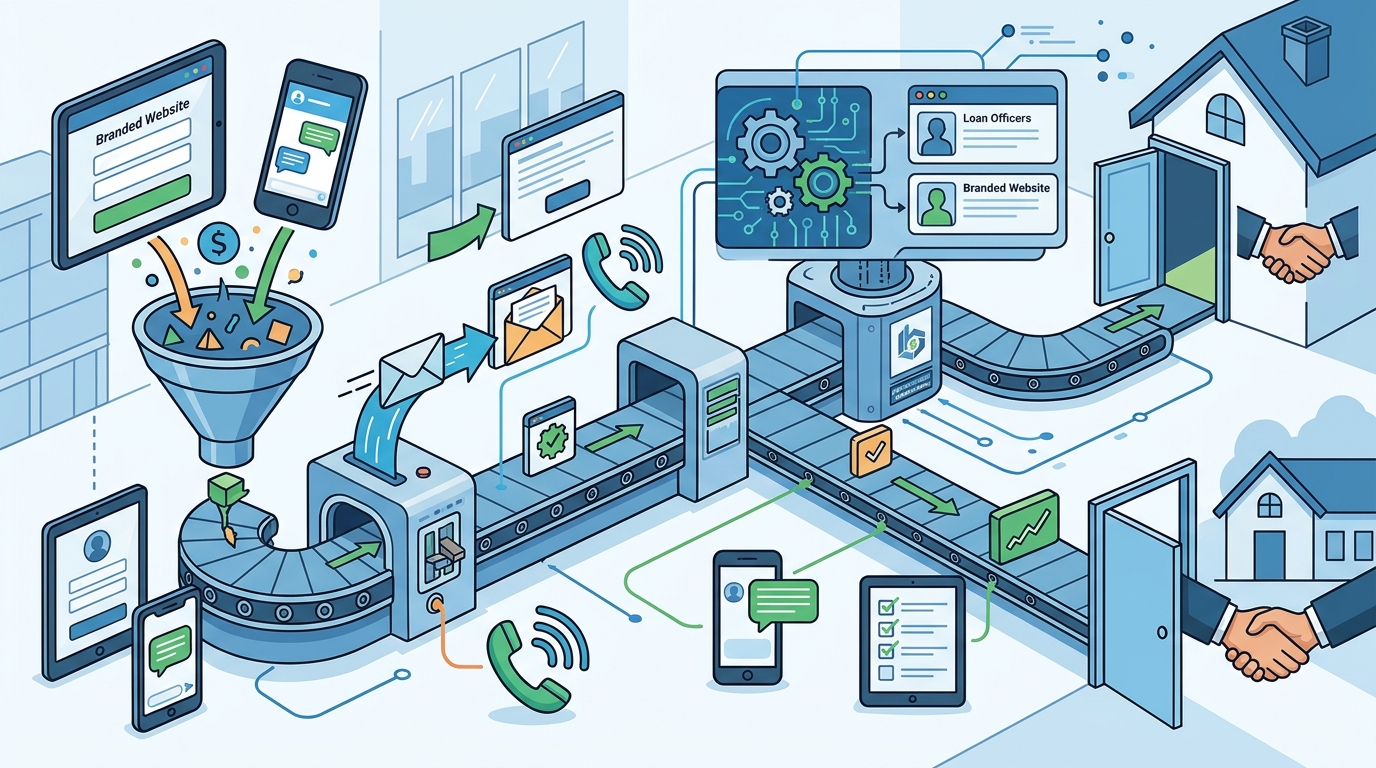
Mortgage brokers can keep borrowers informed by establishing a consistent, multi-channel communication cadence that updates clients at every stage of the loan lifecycle. This approach reduces anxiety and prevents leads from going cold. BrokeragePipeline supports this workflow by connecting your branded website, loan officer profiles, and automated follow-up tools into a single operational layer. By using structured inquiry forms and AI-assisted speed-to-lead, your team ensures that borrowers receive timely, context-aware updates without manual data entry.
The Critical First Hour: Speed to Lead
The first contact after a borrower submits an inquiry is the most critical moment in the sales cycle. Research consistently shows that the likelihood of conversion drops sharply as response time increases. A speed-to-lead strategy is a process where a business contacts a potential customer within a defined short timeframe, typically under five minutes, to capitalize on high intent. For mortgage brokerages, this means the first call or message must happen almost immediately after form submission. according to Statement on Working
Manual follow-up often fails because loan officers are busy with underwriting or closing tasks. BrokeragePipeline addresses this gap with a voice AI receptionist that dials new applicants within seconds. This tool qualifies the lead using the data already provided in the guided inquiry, such as loan purpose and property value. If the borrower is a strong fit, the system bridges the call to an on-duty loan officer in real time. This ensures the human conversation starts with full context, eliminating the need to re-ask basic questions.
Structured Updates During Underwriting
Once the application is submitted, the process enters a phase of waiting and documentation. Borrowers often feel lost during this period, leading to frustration and potential abandonment. A structured update protocol is a defined schedule of communications that informs the client of specific milestones, such as document receipt, appraisal scheduling, and underwriting review. This transparency builds trust and positions the broker as a proactive advisor rather than a passive processor.
Effective communication during underwriting requires tracking the status of every required document. The protected owner pipeline in BrokeragePipeline allows operations teams to monitor lead statuses and assignments from a single dashboard. When a document is missing, the system can flag it for immediate follow-up. This ensures that the loan officer knows exactly what is holding up the file. By keeping the borrower informed about these specific bottlenecks, you manage expectations and reduce the volume of inbound status-check calls.
Managing Rate Locks and Closing
The final stages of the mortgage process involve rate locks, final approvals, and closing coordination. These steps are time-sensitive and often involve complex financial decisions. Borrowers need clear, jargon-free explanations of what is happening and why. A closing communication plan is a sequence of targeted messages that guide the borrower through the final days of the loan process, ensuring they are prepared for the settlement meeting.
During this phase, the risk of miscommunication is highest. A single missed call or delayed email can result in a rate lock expiring or a closing date slipping. BrokeragePipeline’s workflow tools help keep the public experience and internal follow-through close together. The platform ensures that the referring loan officer remains attached to the lead throughout the journey. This continuity means the borrower always speaks to the same person who guided them from the initial inquiry. Consistency in communication is a key driver of customer satisfaction and referral potential.
Compliance and Data Privacy in Communication
As communication becomes more automated, compliance becomes a primary concern. The Telephone Consumer Protection Act (TCPA) and the Gramm-Leach-Bliley Act (GLBA) impose strict rules on how consumer financial data is handled and how automated calls are made. A compliance-aware communication strategy is a framework that ensures all borrower interactions meet federal and state regulatory requirements for consent and data security. Ignoring these rules can result in significant fines and reputational damage.
BrokeragePipeline is designed with these regulations in mind. The platform records a consent log for every borrower who agrees to be contacted by phone or SMS. This log includes the exact consent language shown, a timestamp, and the IP address associated with the submission. This audit trail supports TCPA compliance and protects the brokerage. Furthermore, borrower lead data is stored inside the brokerage’s protected workspace, ensuring that sensitive information is not shared with other tenants on the platform. This security posture allows brokers to communicate confidently without fear of data breaches.
Measuring Communication Effectiveness
Without data, it is impossible to know if your communication strategy is working. Brokers need to track metrics such as response time, lead conversion rate, and borrower satisfaction scores. A communication KPI is a quantifiable measure used to evaluate the success of borrower outreach efforts over a specific period. Tracking these metrics allows teams to identify gaps in the process and make data-driven improvements.
The owner dashboard in BrokeragePipeline provides visibility into daily operations and lead performance. Owners can review how quickly leads are being contacted and how they are progressing through the pipeline. This data helps in staffing decisions and resource allocation. For example, if a specific loan officer has a high volume of inbound status-check calls, it may indicate a need for better automated updates. By analyzing these patterns, brokerages can refine their communication cadence to improve efficiency and borrower experience.
Key Takeaways
- Speed to lead is the most critical factor in converting mortgage inquiries into closed loans.
- Automated AI receptionists can handle initial qualification and bridge to human officers within seconds.
- Structured update protocols during underwriting reduce borrower anxiety and inbound status-check calls.
- Consistency in communication, with the same loan officer handling the entire journey, builds trust.
- Compliance with TCPA and GLBA requires robust consent logging and data security measures.
- Tracking communication KPIs helps identify process gaps and improve overall efficiency.
Frequently Asked Questions
How quickly should a mortgage broker contact a new lead?
Best practices suggest contacting a lead within five minutes of submission. BrokeragePipeline’s AI receptionist dials applicants within seconds to ensure the borrower is reached while intent is high.
Does BrokeragePipeline replace loan officers?
No. BrokeragePipeline is a technology platform that assists loan officers. The AI receptionist qualifies leads and transfers them to licensed loan officers for the actual lending conversation.
How does the platform handle borrower data privacy?
Borrower data is stored in a protected workspace specific to each brokerage. The platform acts as a processor, storing and routing data on the brokerage’s behalf, with access limited by role.
Can the AI receptionist handle inbound spam calls?
Yes. The system includes an inbound telemarketer shield that screens calls around the clock, answers office FAQs, and auto-hangs up on spam and robocallers.
Is BrokeragePipeline a mortgage lender?
No. BrokeragePipeline is a mortgage technology provider. It is not a lender, broker, or financial institution, and it does not originate loans or make credit decisions.
Conclusion
Keeping borrowers informed is not just a courtesy; it is a competitive advantage. By leveraging technology to streamline communication, mortgage brokerages can improve conversion rates and customer satisfaction. BrokeragePipeline provides the tools to manage this workflow efficiently, from the first automated call to the final closing update. To see how these tools can transform your brokerage’s operations, to explore the platform.